



Most small businesses do not have a marketing problem because they lack effort.
They have a marketing problem because they are doing disconnected things and hoping those things magically turn into customers.
They post on social media. They boost a few ads. They redo the website. They print some flyers. They sponsor a local event. Then they look around three months later and wonder why the phone is not ringing.
That is not a local marketing strategy. That is a pile of random activities wearing a fake mustache.
If you want to learn how to market your business locally, start here: your marketing needs both traffic and conversion.
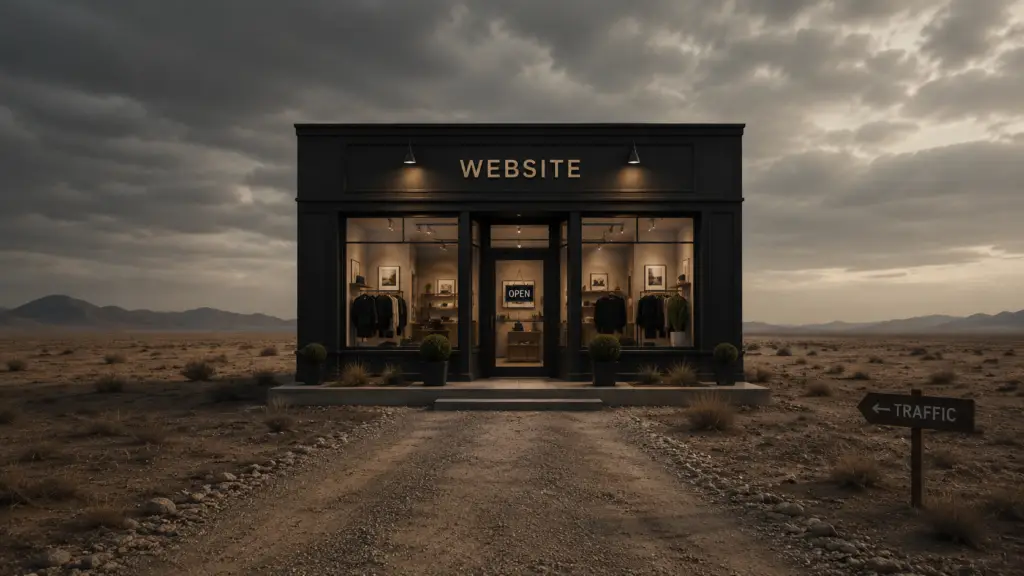
A website by itself is not a lead generator. It is more like a retail storefront: it must look professional, explain the offer, and create a good buying experience. Advertising a confusing store wastes money.
But the opposite is also true. A beautiful store with no foot traffic is just a very expensive secret.
Online lead generation works the same way. You need a website built to convert and active local marketing that drives qualified people to it.
What Local Marketing Actually Means
Local marketing is the process of promoting your business to people in a specific geographic area. That could mean your city, county, service area, neighborhood, or specific regions where your best customers live and work.
For small businesses, this matters because you usually do not need the entire internet. You need the right local customers.
A roofing company does not need clicks from California if it serves Metro Detroit. A financial advisor in Auburn Hills does not need a wide audience of random people if the target audience is nearby professionals, business owners, families, or retirees.
Good local marketing helps you promote your business where local consumers are already paying attention.
- Google search
- Google Maps
- Your Google Business Profile
- Local SEO
- Local directories and online directories
- Social media platforms
- Local advertising
- Email marketing
- Direct mail
- Local publications
- Community groups
- Referral partners
- Business shows
- Local events
The goal is not to be everywhere. The goal is to be visible in the right places often enough that nearby customers remember you when they need what you sell.
Why Most Local Marketing Fails
1. Businesses Confuse Activity With Strategy
Posting three times on Facebook is activity. Running ads without tracking is activity. Buying a local newspaper ad once because someone asked nicely is activity.
None of that is automatically a marketing plan.
A real plan defines the target audience, the offer, the message, the channels, the budget, and the expected conversion points. Without that, you are guessing. And guessing is usually where money goes to die.
2. Businesses Expect the Website to Do Everything
A website can increase conversion rates. It can support SEO. It can support digital advertising. It can build trust before someone contacts you. It can explain your services, show positive reviews, answer common questions, and make the next step obvious.
But it does not generate traffic just by existing. Your website supports lead generation. It is not the whole machine.
3. Businesses Advertise Before Fixing the Buying Experience
This is the retail storefront problem. Small businesses run digital ads to landing pages with weak messaging, buried phone numbers, and no clear next step.
That is not a traffic problem. That is a conversion problem.
4. Businesses Ignore Local Search
Local search is where people search for a product or service near them. Think “financial advisor near me,” “roofing company in Troy,” or “HVAC repair near Auburn Hills.”
When people search like this, they are often closer to taking action. That makes local SEO one of the most important channels for small businesses.
Local SEO helps your business appear in local search results, organic search results, and Google Maps when nearby customers are actively looking. If you are not showing up there, your competitors are getting chances you are not.
5. Businesses Quit Before Anything Compounds
Local marketing is repetition. People search, see your Google Business Profile, read reviews, visit the website, leave, see your social media, get a referral, see your truck, search again, and then call.
This is why marketing efforts need consistency. Ads that convert viewers into customers usually require repeated exposure. SEO takes time. Reviews build over time. Social media builds familiarity over time. Local partnerships take time to create trust.

The Four Core Goals: Brand, Website, SEO, and Ads
One of the easiest ways to understand how to promote your business locally is to separate the job of each piece. Everything should not be expected to do everything.
The Goal of Branding
The goal of branding or a rebrand is to improve brand perception, increase trust, credibility, and memorability, and support stronger lead and sales conversion across all channels.
Your brand is not just your logo. It is the way people understand your business before they talk to you.
The Goal of a Website
The goal of a website is to increase lead conversion rates from digital and offline traffic sources. It should support marketing campaigns, sales conversations, referral traffic, local SEO, ads, analytics, and conversion optimization.
A website is a conversion tool. It should explain what you do, where you do it, who you help, why people should trust you, and what they should do next.
It isn’t usually going to generate adequate lead volume on its own, it requires marketing too.
The Goal of SEO
The goal of SEO is to rank higher in search results for terms qualified prospects are searching, capture organic traffic, generate qualified leads from search engines, and build long term growth.
Local SEO is especially important because people search with location-based intent. Local keywords are phrases that include geography, services, or “near me” style intent. Using local keywords in website content helps search engines understand where you work and what services you offer.
The Goal of Digital Advertising
The goal of digital advertising is to generate leads through search engine targeted ads that capture active demand, plus demographic, interest, display, video, social media, or other ads that create and influence demand.
Search ads are strongest when people search for something specific. Social media ads, video ads, and display ads are usually better at building awareness, creating demand, retargeting, or reaching a specific audience.
Start With Google Business Profile
A Google Business Profile is one of the most important local marketing tools for small businesses. It helps your business appear across Google Search and Google Maps.
Your Google Business Profile should include accurate business details, including your business name, categories, services, hours, phone number, website, photos, and service area.
This is basic business optimization, but plenty of businesses still get it wrong.
The profile should also be active. Add photos, list your services clearly, request reviews from happy customers, respond to reviews, add updates or local promotions, and keep contact info and hours accurate.
Actively requesting customer reviews on Google Business Profile can improve trust and visibility. The mistake is treating the profile like a one-time setup. It is not. It is a local marketing asset.
Build a Website That Converts Local Customers
Before you worry about how to market your business locally, make sure your website can handle the traffic.
Your website should answer the questions real customers ask before they contact you.
- What do you do?
- Where do you do it?
- Who do you help?
- What makes you credible?
- What services do you offer?
- What problems do you solve?
- What should someone do next?
- Why should they choose you instead of another option?
The website should have clear service pages, location signals, reviews, calls to action, and landing pages for key campaigns. If you are launching a new service, create a strong page for it instead of mentioning it once in a paragraph somewhere.
The goal is not to stuff local keywords everywhere. The goal is creating content that helps customers and gives search engines clear context.
Use Local SEO to Capture Existing Demand
Local SEO is one of the best ways to market your business locally because it reaches people who are already searching. These people are not being interrupted. They are looking.
A practical local SEO plan usually includes local keywords, optimized service pages, useful localized content, Google Business Profile optimization, local directories, reviews, local backlinks, and technical website improvements.
Local directories and online directories help search engines verify that your business is real and consistent. Maintaining accurate business information across multiple online platforms is important because inconsistent listings create confusion.
Your business name, phone number, website, and address or service area should be consistent wherever possible. Local SEO is not instant, but it can become one of the strongest long-term channels for nearby customers.
Use Paid Ads to Speed Up Demand
SEO builds over time. Ads can move faster. That does not mean ads are better. It means they do a different job.
Search ads can help you show up when people search for high-intent services. Social ads can reach a local audience based on demographics, interests, behavior, or geography. Geo targeted ads can focus spend around specific neighborhoods, cities, or service areas.
This is useful when you want to advertise locally without paying for a huge audience that will never buy from you.
Good local advertising should connect the ad, offer, landing page, and follow-up process. Bad local advertising just throws money at impressions and hopes.
Use digital ads when you need leads faster, want to test a new offer, want visibility while SEO is growing, need to promote your business in specific regions, or want to retarget website visitors.
The key is tracking. If you do not know which ads produced calls, forms, sales, and revenue, you are not managing marketing. You are buying mystery traffic.
Do Not Ignore Social Media
Social media is not magic. It is also not useless.
For local businesses, social media works best when it supports trust, visibility, proof, and familiarity. Social media platforms like Facebook, Instagram, LinkedIn, TikTok, and Nextdoor can help you stay visible with local customers and community members.
The content does not need to be fancy. It needs to be useful, real, and consistent.
- Finished projects
- Before-and-after photos
- Team updates
- Customer stories
- Local promotions
- Educational tips
- Behind-the-scenes content
- Community involvement
- Local events you support
- Answers to common customer questions
Social media channels are also useful for retargeting. Someone may visit your website, leave, and later see a reminder through social media ads. That is not a failure. That is how attention works.

Mix Digital Visibility With Physical Presence
Local marketing works best when people see you in more than one place. That is why combining digital visibility with physical presence is powerful.
Your website, Google Business Profile, local SEO, and ads help people find you online. Your signage, vehicles, direct mail, business shows, community involvement, local newspaper ads, and local publications help people recognize you offline.
For many small businesses, the best strategy is not digital or traditional. It is both.
A local homeowner might see your truck, search your business name, check your Google Business Profile, read reviews, visit your website, and call three days later. The system worked.
Try Local Promotions Without Being Cheap
Local promotions can work, but they need to be handled carefully. A promotion should create urgency or interest without training customers to only buy when you discount.
Examples include seasonal inspections, new customer offers, referral incentives, bundled services, community-specific offers, limited-time consultations, and event-based local promotions.
Use local promotions to introduce a new service, re-engage a customer list, support a seasonal need, or create activity in a specific local area. Keep the offer easy to understand. Complicated offers do not attract customers. They create hesitation.
Build Local Partnerships
Local partnerships can help you reach people who already trust someone else. That might include complementary businesses, nonprofits, community groups, vendors, schools, churches, real estate agents, property managers, or other local businesses.
The best local partnerships are not random logo swaps. They are mutually useful. A landscaper might partner with a hardscaping company. A financial advisor might partner with an estate attorney. A roofing company might partner with a gutter company.
Local partnerships work when both sides understand the audience, the offer, and the referral value. For bigger partnerships, a simple written agreement can prevent confusion around roles, responsibilities, promotion, and KPIs.
Use Email Marketing and Follow-Up
Email marketing is underrated for local businesses because most small businesses are obsessed with finding new customers and forget about the people they already know.
Your customer list is an asset. Use it.
Send helpful reminders, seasonal tips, service updates, local promotions, and follow up emails after quotes, consultations, or purchases.
This is not about blasting people with junk. It is about staying useful. A past customer may not need you today. But when they do, you want to be the business they remember.
Customer satisfaction also matters here. Good follow-up creates repeat sales, referrals, and better reviews. Marketing does not end when someone becomes a customer. That is where the next sale often begins.

Common Local Marketing Questions
How Can I Promote My Business Locally?
You can promote your business locally by combining local SEO, Google Business Profile optimization, local advertising, social media, community involvement, reviews, referrals, partnerships, direct mail, and local promotions.
Start with the basics: make sure your website converts, optimize your Google Business Profile, use local keywords, build accurate local directories, ask for reviews, run targeted local ads, stay visible on social media, build local partnerships, and track every call, form, and sale.
That is how to market your business locally without relying on one fragile channel.
What Is the 3-3-3 Rule for Marketing?
The 3-3-3 rule for marketing is a simple way to avoid spreading yourself too thin. For local marketing, think of it like this: pick 3 key messages, 3 core audience segments, and 3 primary marketing channels.
For example, a local service business might focus on quality, speed, and trust. Its target customers might be homeowners, property managers, and commercial building owners. Its channels might be local SEO, Google Business Profile, and search ads.
What Is the 1% Rule in Business?
The 1% rule in business is the idea that small improvements compound over time. In marketing, that might mean improving your website conversion rate by 1%, increasing review requests by 1%, improving ad performance by 1%, or getting 1% better at follow-up.
Small improvements repeated consistently can create major gains over time. Most small businesses do not need one giant miracle. They need better execution every week.
What Is the 7 11 4 Rule of Marketing?
The 7 11 4 rule of marketing is the idea that people may need several hours of engagement, multiple touchpoints, and multiple contexts before they are ready to buy.
Do not take it as a perfect law. Take it as a reminder. Customers usually need repetition before they trust you.
They might see your ad, visit your website, read reviews, check social media, hear about you from a friend, see your truck, and then search again later. This is why local marketing should not rely on one channel.
Track What Actually Matters
Local marketing without tracking turns into opinion. And opinion gets expensive.
- Website traffic
- Calls
- Form submissions
- Lead source
- Cost per lead
- Cost per sale
- Close rate
- Revenue by channel
- Google Business Profile actions
- Local search rankings
- Review growth
- Ad performance
You do not need to drown in dashboards. You need to know what is working.
If SEO is producing leads, invest more. If ads are producing clicks but no calls, fix the landing page or offer. If social media gets overall engagement but no sales, decide whether it is supporting awareness or just feeding the algorithm.
Final Thought: Stop Looking for One Magic Channel
The best way to promote your business locally is not to pick one tactic and pray. It is to build a system where each piece has a job.
Branding improves perception. The website improves conversion. Local SEO builds organic visibility. Google Business Profile helps nearby customers evaluate you. Digital advertising creates targeted lead flow. Social media builds familiarity. Email marketing, partnerships, and referrals expand trust.
A website without marketing is a nice storefront on an empty road. Marketing without a good website is paid traffic walking into a messy store. You need both.
Want help building the system instead of guessing at it? Book a meeting with Marketing Sux. We will help you figure out what is worth fixing, what is worth funding, and what is just marketing noise.